
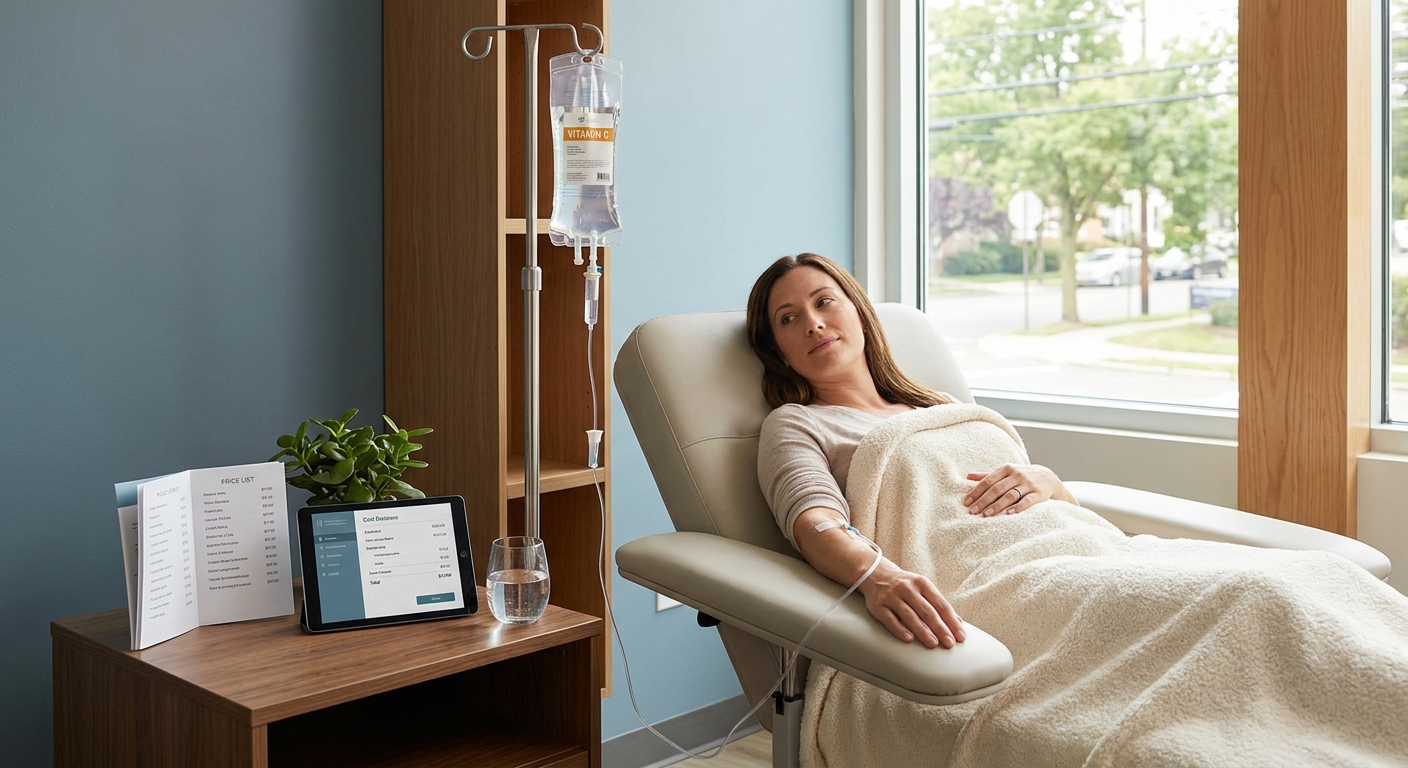
Vitamin C IV therapy costs vary by dose, session length, and provider — this guide breaks down what drives the price in 2026 and walks through exactly what a session looks like at a physician-led clinic in New Jersey.
TL;DR
- Cost of vitamin C IV therapy depends on dose size, add-ins, and how often you go — not a flat rate.
- Infusion Center of NJ runs physician-led sessions in Clifton and Tenafly, not a walk-in drip bar model.
- High-dose protocols typically range from 25g to 100g; G6PD deficiency rules out most patients from that range.
- Sessions run 30-60 minutes depending on dose — budget the time, not just the money, before booking.
Why this matters
Most people searching cost of vitamin C IV therapy are comparing a wellness spa quote against a medical clinic quote and can't figure out why they're different. They're not the same service.
A physician-led infusion involves an intake, a dosing decision based on your labs and history, and monitoring during the drip. A walk-in drip bar often skips most of that. The price difference reflects who is actually managing your dose, not just the bag of fluid hanging on the pole.
Infusion Center of NJ runs its vitamin C protocols out of Clifton and Tenafly with physician oversight, which is the detail to check before you book anywhere based on price alone.
What you'll need
- A recent physical or willingness to complete an intake at the clinic before your first infusion
- Bloodwork history, if you have it, especially anything noting G6PD enzyme status
- 45-75 minutes of free time depending on the dose and how busy the clinic is that day
- A list of current medications and supplements to review with the physician
- A plan for hydration the day before — dehydrated veins make IV placement harder and slower
The steps
1. Confirm you're a candidate
High-dose vitamin C IV therapy is contraindicated for people with G6PD deficiency, a genetic enzyme condition that can cause severe red blood cell breakdown at high vitamin C doses. This is the single most important screening step and it's why a physician-led model matters more than price for this specific therapy.
Skipping this step is the most common mistake people make when they shop by price alone in 2026. A clinic that doesn't ask about G6PD status before a high-dose session is skipping a real safety check.
2. Schedule an intake, not just an infusion
Book your first visit as an evaluation, even if the clinic can do the infusion the same day. The intake is where the physician decides where in the 25g-100g range your dose should start.
Most first-time patients start lower in that range and increase over subsequent visits once tolerance is established. Rushing straight to a high dose on visit one is a red flag, not a shortcut.
3. Review the dosing plan and ask about cost drivers
Cost of vitamin C IV therapy scales with dose size, additives (B-complex, minerals, glutathione push, etc.), and whether you're booking a single session or a package. Ask the clinic directly what's included in the quoted price and what triggers an upcharge.
Insurance typically does not cover wellness IV therapy since it's elective, so get a clear cash-pay number before the needle goes in, not after.
4. Hydrate before you arrive
Drink water the morning of your appointment. Dehydration makes veins harder to find, which means more attempts at IV placement and more bruising afterward.
This sounds minor but it's the most common reason a session runs long or a first stick fails.
5. Sit for the infusion
A typical vitamin C session runs 30-60 minutes depending on the dose. Lower doses move faster; the higher end of the 25g-100g range takes longer because the rate has to be controlled to avoid vein irritation.
You'll likely feel a cool sensation moving up the arm as the infusion runs — that's normal and expected, not a sign something's wrong.
6. Ask about a follow-up cadence
One session rarely tells you much. Ask the physician what frequency they recommend for your goal — general wellness maintenance looks different from someone using it during an illness or recovery period.
Repeat visits are usually where package pricing starts to matter more than single-session pricing.
7. Track how you feel and report back
Note energy, hydration, and any injection-site symptoms in the 24-48 hours after your session. Bring that feedback to your next visit so the physician can adjust dose or additives if needed.
This is the step most people skip, and it's the one that actually makes the second and third sessions more useful than the first.
Troubleshooting
Quote feels high compared to a spa down the street. Ask what's included — physician evaluation, monitoring, and dose customization cost more than an unsupervised drip, and that's usually the entire gap.
Bruising at the injection site. Common with dehydration or a difficult stick. Hydrate more aggressively the day before your next visit and mention it to the nurse before placement.
Session ran longer than expected. Higher doses in the 25g-100g range are infused slower by design to protect the vein and avoid irritation — this is a safety choice, not inefficiency.
Insurance denied the claim. Expected. Vitamin C IV therapy for wellness purposes is elective and almost never covered; budget it as a cash-pay service.
Feeling lightheaded during or after. Tell the staff immediately — it's usually addressed by slowing the infusion rate or adjusting fluid volume, not a reason to panic, but it should always be reported in real time.
Not sure if you should be getting this at all. If you have kidney issues, are on dialysis, or don't know your G6PD status, that's a conversation for the physician before scheduling, not after.
Tools and resources
- Physician intake and dosing consultation before your first infusion
- A hydration routine starting 24 hours before your appointment
- Your medication and supplement list, printed or on your phone
- Bloodwork records, if available, especially G6PD status
- Infusion Center of NJ for current scheduling and physician-led protocols in Clifton and Tenafly
FAQ
What is the cost of vitamin C IV therapy in 2026?
Cost of vitamin C IV therapy depends on dose size, additives, and session frequency rather than a single flat rate. Confirm pricing directly with the clinic before booking since insurance typically doesn't cover elective wellness infusions.
Is vitamin C IV therapy covered by insurance?
No, wellness-focused vitamin C IV therapy is almost always cash-pay because it's elective rather than medically necessary. Some clinics offer package pricing for repeat sessions, which is worth asking about upfront.
How much vitamin C is in a typical IV session?
Doses commonly range from 25g to 100g depending on your history and the physician's recommendation. First-time patients usually start lower in that range and increase over subsequent visits.
Who should not get high-dose vitamin C IV therapy?
People with G6PD enzyme deficiency should avoid high-dose vitamin C IV therapy due to the risk of red blood cell breakdown. Kidney disease and dialysis patients should also discuss risks with a physician before scheduling.
How long does a vitamin C IV session take?
A typical session runs 30 to 60 minutes depending on the dose administered. Higher doses in the 25g-100g range are infused slower to protect the vein and avoid irritation.
Is vitamin C IV therapy safe?
It's generally safe for screened candidates when administered under physician supervision, which is why intake and G6PD screening matter more than price when choosing a clinic. Unsupervised drip bars skip steps that a medical clinic won't.
How often should you get vitamin C IV therapy?
Frequency depends on your goal — general wellness maintenance looks different from support during illness or recovery. A physician can set a cadence after your first session based on how you respond.
Can vitamin C IV therapy be combined with other infusions?
Many clinics pair vitamin C with additives like B-complex or glutathione, or offer it alongside other protocols such as a Myers Cocktail. Ask the physician what combinations make sense for your specific goal before adding anything.
One last thing
The number that actually matters isn't the price on the intake form — it's your G6PD status. Skip that screening step to save time and you're not getting a cheaper version of the same service; you're getting a different, riskier one. Ask about it before you ask about the price.
Infusion Center of NJ structures its vitamin C IV therapy around that screening step first, dose second, and price third — which is the order that actually protects you in 2026 and beyond.