NAD+ IV therapy shows up constantly in recovery forums and sober-living group chats, usually with a claim attached that sounds too clean: replenish the coenzyme, ease the withdrawal, feel human again in a week. This guide breaks down who NAD+ infusion support actually fits, what a physician-led program should check before infusing, and where the therapy realistically sits inside a recovery plan in 2026.
TL;DR
- NAD+ therapy for addiction recovery works as an adjunct to counseling and medical detox, not a replacement for either.
- Physician-led screening before the first infusion is the single biggest differentiator between a safe protocol and a risky one.
- Sessions typically run in a monitored outpatient setting, with dosing adjusted after bloodwork and a full history.
- Skip any provider offering NAD+ as a standalone detox cure with no physician oversight — that is a red flag in 2026.
Why this matters
NAD+ (nicotinamide adenine dinucleotide) is a coenzyme every cell needs for energy production, and chronic substance use depletes it faster than the body can replace it through diet alone. That depletion is one reason early recovery feels physically brutal — fatigue, brain fog, disrupted sleep. Infusion Center of NJ treats NAD+ infusion as a supportive therapy layered onto a patient's existing medical and behavioral care, delivered under physician supervision at its Clifton and Tenafly, New Jersey locations.
The distinction matters because the therapy is easy to oversell. NAD+ does not reverse addiction, and no credible physician will tell a patient otherwise. What it can do, when dosed and monitored correctly, is support cellular energy metabolism during a period when the body is under real physiological stress.
Who this is for
This is written for someone past acute withdrawal — typically a patient several days to a few weeks into recovery, already working with a physician, therapist, or structured program — who is asking whether NAD+ IV therapy is a reasonable add-on. It is not written for someone in active acute withdrawal who needs medical detox first; that stage requires supervised medical management, not an infusion clinic.
What to look for in NAD+ therapy for addiction recovery
Physician-led intake, not a drip-bar questionnaire
A clinic that skips a real medical history — current medications, liver and kidney function, psychiatric history, other substances involved — is not equipped to dose NAD+ safely. Board-certified oversight is the difference between a tailored protocol and a one-size infusion.
Bloodwork before the first session
NAD+ metabolism interacts with liver function, and recovery from substance use often means the liver is already under strain. A program that orders labs before infusing is protecting the patient, not slowing them down.
Dosing that starts conservative and adjusts
NAD+ protocols commonly range from 250 mg to 1,000 mg per session depending on tolerance and goals, with lower starting doses for patients newer to infusion therapy. A provider who pushes a high dose on visit one without checking tolerance is optimizing for a dramatic story, not patient safety.
Integration with counseling and medical detox, not replacement of it
NAD+ IV therapy has no evidence base as a standalone addiction treatment. Any clinic pitching it as a substitute for therapy, medication-assisted treatment, or a structured program is misrepresenting what the infusion does.
Realistic session length and monitoring
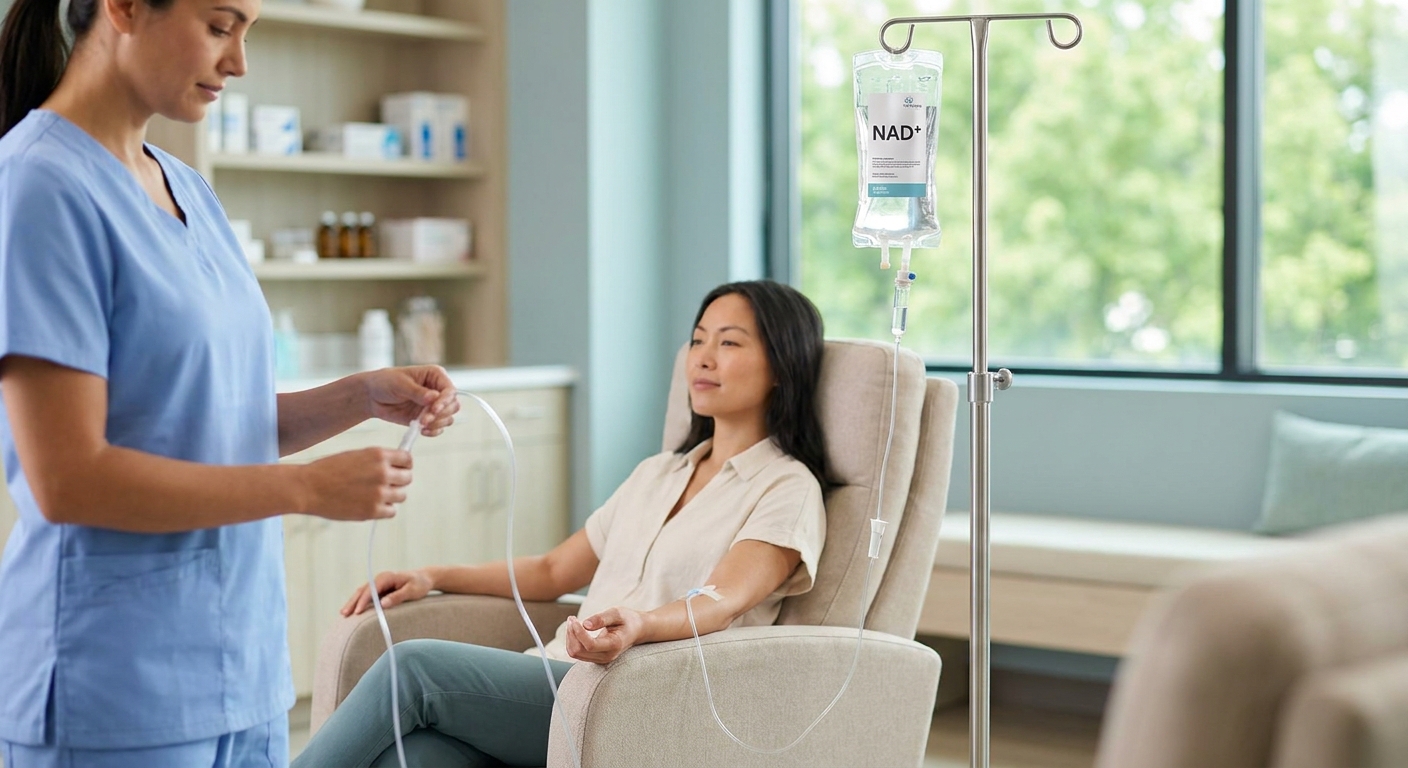
Infusions generally run 60 to 120 minutes depending on dose and rate, administered in a monitored setting where staff can watch for infusion-site reactions or changes in vitals. A rushed 20-minute push is a warning sign, not efficiency.
Transparent pairing with other supportive therapies
Many patients pair NAD+ with Myers Cocktail or high-dose Vitamin C infusions for broader nutrient support during recovery. A clinic that can explain why it recommends one combination over another — rather than upselling every add-on — is worth trusting more.
Candidate profiles: who benefits, who should wait
The stabilized outpatient — Someone three or more weeks into structured outpatient treatment, cleared by their treating physician, asking about fatigue and cognitive fog. Spec that matters: baseline labs within normal range. Verdict: Consider, with physician sign-off on frequency.
The early-recovery patient still in acute withdrawal — Physically unstable, possibly still under medical detox supervision. Spec that matters: withdrawal management is not complete. Verdict: Skip until a treating physician confirms stability; infusion clinics are not detox facilities.
The patient on multiple psychiatric or liver-metabolized medications — Complex medication interactions require a physician review before any infusion, not just a symptom checklist. Spec that matters: full medication reconciliation completed. Verdict: Consider, only after documented physician review.
The person seeking NAD+ as a sole detox solution with no other care in place — No therapy, no medical follow-up, just the infusion. Spec that matters: zero concurrent treatment plan. Verdict: Skip — this is the exact pattern reputable physician-led clinics decline to treat as a standalone service.
The recovery patient already stable and looking for maintenance support — Months into recovery, working with a therapist, asking about periodic NAD+ sessions for energy and focus. Spec that matters: consistent bloodwork monitoring over time. Verdict: Buy as an ongoing adjunct, scheduled with a physician-set cadence.
Talk to a physician before your first NAD+ session
Individualized screening at Clifton and Tenafly locations before any infusion.
What to avoid
- Walk-in NAD+ with no intake form. If nobody asks about your medications or recovery timeline before hooking up the IV, that clinic is not equipped for this population.
- Marketing that promises detox in a single session. NAD+ IV therapy has never been shown to shorten acute withdrawal in a single infusion; anyone claiming that is selling a story, not medicine.
- Clinics that discourage you from telling your therapist or physician about the infusions. Coordinated care is the entire point — a program that wants to operate in isolation from your treatment team is a program to leave.
Verdict comparison
| Candidate profile | Physician screening required | Bloodwork before infusion | 2026 verdict |
|---|---|---|---|
| Stabilized outpatient, 3+ weeks in | Yes | Yes | Consider |
| Active acute withdrawal | Yes, detox first | Not applicable yet | Skip |
| Complex medication history | Yes, full reconciliation | Yes | Consider |
| No concurrent treatment plan | Refused by reputable clinics | N/A | Skip |
| Stable, months into recovery | Yes, periodic | Yes, ongoing | Buy |
FAQ
Is NAD+ therapy proven to help addiction recovery?
NAD+ IV therapy is not a proven standalone addiction treatment in 2026 — it supports cellular energy metabolism during recovery, but it works as an adjunct alongside counseling and medical detox, not a replacement for either.
How much does NAD+ IV therapy cost for recovery support?
Pricing varies by dose and session length and is best confirmed directly with the clinic administering the infusion, since protocols are individualized based on labs and history.
Can I get NAD+ therapy during active withdrawal?
Active acute withdrawal generally requires medical detox supervision first, not an outpatient infusion clinic. Most physician-led programs will ask you to stabilize with your treating physician before scheduling an NAD+ session.
What dose of NAD+ is typical for recovery support?
Protocols commonly range from 250 mg to 1,000 mg per session, with providers starting conservative and adjusting based on tolerance and bloodwork rather than defaulting to the highest dose.
How long does an NAD+ infusion session take?
Sessions typically run 60 to 120 minutes depending on dose and infusion rate, administered in a monitored outpatient setting where staff track vitals throughout.
Is NAD+ therapy better than a Myers Cocktail for recovery?
They serve different purposes — NAD+ targets cellular energy metabolism while a Myers Cocktail delivers broader vitamin and mineral support, and many recovery patients use both under physician guidance rather than choosing one over the other.
Do I need bloodwork before starting NAD+ therapy?
Reputable physician-led clinics order labs before the first infusion because NAD+ metabolism interacts with liver function, which is often under strain during early recovery.
Should my therapist know I'm getting NAD+ infusions?
Yes — coordinated care between your infusion provider and your treatment team is a core safety check, and any clinic that discourages that conversation is a reason to look elsewhere.
One last thing
The detail most people skip past: NAD+ depletion is not unique to addiction, it happens with age and chronic stress too, which is exactly why the therapy gets marketed so broadly and why the recovery-specific claims deserve more scrutiny, not less. A physician who says "let's see your labs first" is giving you more useful information than any before-and-after testimonial.
Infusion Center of NJ frames NAD+ IV therapy as one piece of an individualized plan, built around a patient's actual medical history rather than a generic protocol, which is the standard worth holding any clinic to in 2026.