
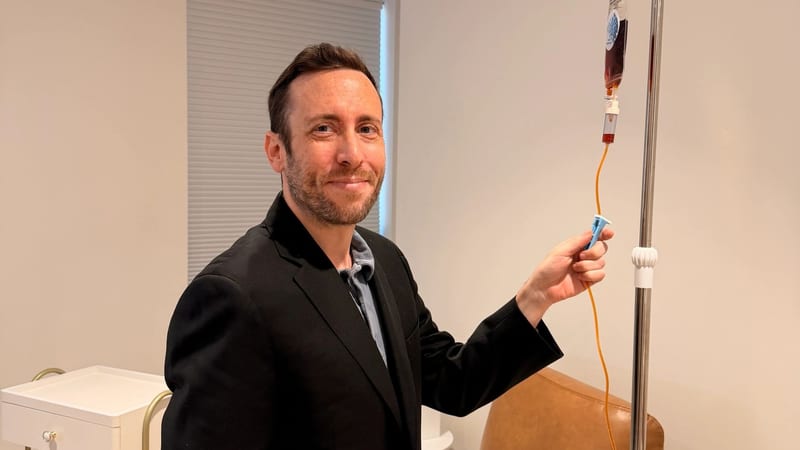
Oral iron supplements are the first-line recommendation for iron deficiency in most clinical guidelines — and for a significant portion of patients, they fail. GI side effects drive discontinuation, hepcidin-mediated absorption limits cap how much iron the gut can actually take up in a single dose, and conditions like Crohn's disease, celiac disease, ulcerative colitis, bariatric surgery, and heavy menstrual bleeding either damage the absorptive surface or outpace what oral iron can replace. When that happens, the clinical question shifts from whether to supplement to whether to bypass the gut entirely.
This guide compares IV iron infusions and oral iron supplements across the scenarios where the choice actually matters in 2026, and explains how Infusion Center of NJ coordinates the lab workup and infusion for patients in Clifton, Tenafly, and across Bergen and Passaic counties.
TL;DR
- Oral iron (ferrous sulfate, ferrous gluconate) frequently fails due to GI side effects — constipation, nausea, cramping — that cause patients to stop taking it before ferritin levels recover.
- Hepcidin, the hormone that regulates iron absorption, limits how much iron the gut can absorb from a single oral dose; splitting doses helps but does not solve the problem for patients with malabsorption.
- Conditions that damage or bypass the small intestine — Crohn's disease, ulcerative colitis, celiac disease, bariatric surgery — impair oral iron absorption regardless of dose or formulation.
- Heavy menstrual bleeding can deplete iron stores faster than oral supplementation can replace them, making IV iron the more practical route for many OB/GYN patients.
- Physician-supervised IV iron at Infusion Center of NJ restores iron stores rapidly after Dr. Weiss reviews a complete iron panel: CBC, ferritin, iron saturation, TIBC, and electrolytes.
- OB/GYNs, gastroenterologists, and PCPs can fax records to (973) 955-4378. Patients can also book directly without a referral at (973) 272-6220 or online.
Why this matters
Iron deficiency is one of the most common nutritional deficiencies in the United States, and the gap between a confirmed diagnosis and effective treatment is often not a lack of prescriptions — it is a failure of the oral route to deliver enough iron to actually move the numbers.
The clinical problem in 2026 is that many patients spend months on oral iron, tolerating side effects or not tolerating them at all, while their ferritin stays low and their symptoms persist. The repeat ferritin draw at 8–12 weeks comes back unchanged or minimally improved, and the prescribing physician is left deciding whether to push the oral dose higher, switch formulations, or refer for IV iron.
Infusion Center of NJ, founded by Dr. Jeffrey A. Weiss, MD, FACP — a board-certified internist and 2026 NJ Top Docs honoree — handles that transition directly. Patients can self-refer without a specialist letter. The Clifton location at 842 Clifton Ave Suite 4 is open seven days a week including Thursday evenings. The Tenafly location at 111 Dean Drive Suite 1S serves Bergen County patients.
Clinical scenario verdicts
IV Iron for Confirmed Iron-Deficiency Anemia With Oral Intolerance or Malabsorption (IBD, Celiac, Post-Bariatric, Heavy Menstrual Bleeding)
This is the clearest indication for IV iron in outpatient practice. Patients with inflammatory bowel disease have inflamed or damaged intestinal mucosa that impairs iron absorption and often cannot tolerate the GI irritation of oral iron on top of an already symptomatic gut. Celiac disease damages the duodenal villi where iron is primarily absorbed. Bariatric surgery — particularly Roux-en-Y gastric bypass — reroutes food past the duodenum and proximal jejunum, the segments responsible for most iron uptake. Heavy menstrual bleeding can deplete iron stores at a rate that oral supplementation simply cannot match, particularly in patients who already have borderline ferritin.
For all of these patients, oral iron is not a slower version of the same treatment — it is a route that does not work well enough to be the primary strategy. IV iron bypasses the absorptive barrier entirely and delivers iron directly into the bloodstream, where it is taken up by transferrin and transported to bone marrow and storage sites.
Verdict: Buy with lab confirmation. CBC, ferritin, iron saturation, and TIBC are reviewed before every infusion at Infusion Center of NJ.
IV Iron for Symptomatic Low Ferritin (<30 ng/mL) When Oral Iron Fails After 8–12 Weeks
Patients without a formal malabsorption diagnosis sometimes present with persistently low ferritin despite 8–12 weeks of oral iron supplementation. This can reflect subclinical absorption issues, ongoing blood loss that oral iron cannot keep pace with, or simply inadequate adherence driven by GI side effects.
When a repeat ferritin draw at 8–12 weeks shows minimal improvement — or when the patient reports they stopped taking the supplement because of constipation or nausea — IV iron is the logical next step. The threshold of 30 ng/mL is a commonly used clinical marker, but the decision also depends on symptoms: a patient with ferritin of 22 ng/mL and significant fatigue, hair loss, and restless legs is a different clinical picture than a patient with the same number and no symptoms.
Verdict: Consider following physician lab evaluation. The decision is not purely numerical — it is a clinical judgment that weighs ferritin level, symptom burden, underlying cause, and response to oral therapy.
Oral Iron Supplements for Mild, Asymptomatic Iron Depletion With Normal Gut Absorption
For patients with mildly low ferritin, no symptoms, and no reason to suspect malabsorption, a trial of oral iron is a reasonable first step. Ferrous sulfate, ferrous gluconate, and ferrous fumarate are all effective when the gut can absorb them. Taking oral iron on an alternate-day schedule — rather than daily — has been shown to reduce hepcidin upregulation and may improve net absorption compared to daily dosing.
The key is the follow-up. A repeat ferritin draw at 8–12 weeks tells you whether the oral route is working. If it is not — either because ferritin has not moved or because the patient has stopped taking the supplement due to side effects — that is the point to reassess, not to continue the same approach indefinitely.
Verdict: Consider as a first-line trial with repeat ferritin testing in 8–12 weeks. If ferritin does not improve or GI side effects prevent consistent use, transition to IV iron evaluation.
Empirical Iron Infusions for Fatigue Without Recent Ferritin, TIBC & CBC Bloodwork
Iron overload — hemochromatosis, transfusional iron overload, or iatrogenic overload from unnecessary infusions — carries real clinical risk: liver damage, cardiac arrhythmias, joint disease, and endocrine dysfunction. Infusing iron into a patient whose iron stores are already normal or elevated does not treat fatigue; it causes harm.
Fatigue has a long differential diagnosis. B12 deficiency, folate deficiency, hypothyroidism, sleep apnea, and depression all present with fatigue and are not treated with iron. A physician evaluation with a complete iron panel is not a bureaucratic hurdle — it is the step that determines whether iron is actually the problem.
Verdict: Skip. No responsible physician-led practice infuses iron without confirming deficiency through bloodwork. Labs are mandatory before the first infusion, not optional.
Ready to evaluate your iron levels?
Patients can book directly without a referral. OB/GYNs, gastroenterologists, and PCPs can fax records to (973) 955-4378.
Call (973) 272-6220 or book online. Clifton and Tenafly locations.
Comparison table
| Attribute | Physician-Supervised IV Iron (Infusion Center of NJ) | Oral Iron Supplements | Hospital Outpatient Infusion Suite |
|---|---|---|---|
| Absorption Efficiency | 100% — bypasses GI tract entirely | 10–25% under ideal conditions; lower with malabsorption or hepcidin upregulation | 100% — same IV route |
| GI Side Effects | None — bypasses digestive system | Common — constipation, nausea, cramping, dark stools; major driver of discontinuation | None |
| Time to Ferritin Restoration | Weeks — ferritin typically rises within 2–4 weeks post-infusion | Months — 8–12 weeks minimum with consistent adherence and normal absorption | Weeks — same formulation |
| Wait Time to Schedule in NJ | Same-week appointments; open 7 days including Thursday evenings at Clifton | Immediate — no appointment needed | Typically 2–4 weeks with prior authorization |
| Physician Lab Review & Test-Dose Monitoring | Yes — CBC, ferritin, iron saturation, TIBC reviewed; test dose and monitoring standard | No physician monitoring; self-administered | Yes — hospital intake process |
What to avoid
Continuing oral iron indefinitely when ferritin is not improving. If a repeat ferritin draw at 8–12 weeks shows minimal movement, the oral route is not working well enough. Increasing the dose or switching formulations may help marginally, but a patient with confirmed malabsorption or persistent GI intolerance is not going to absorb their way to a normal ferritin on pills. The decision to transition to IV iron should happen at the 8–12 week mark, not after another six months of the same approach.
Skipping the follow-up ferritin draw after an infusion. One IV iron infusion does not always fully correct a long-standing deficiency, particularly in patients with ongoing blood loss from heavy periods or active IBD. A repeat iron panel 4–8 weeks after the infusion confirms whether levels moved and whether a second infusion is needed. Skipping this step means guessing whether the treatment worked.
Choosing a facility that does not perform a test dose or monitor during the infusion. Modern IV iron formulations — ferric carboxymaltose, low-molecular-weight iron dextran, ferumoxytol — have lower rates of serious hypersensitivity reactions than older formulations, but reactions still occur. A slow initial infusion rate with an observation period, followed by advancement to the full rate, is standard protocol. A facility that runs IV iron at full rate from the start without a monitoring period is compressing a safety step that exists for a reason.
Assuming fatigue means iron deficiency without labs. B12 deficiency, hypothyroidism, folate deficiency, and sleep apnea all cause fatigue and are not treated with iron. A complete iron panel — not just a hemoglobin check — is the minimum workup before attributing fatigue to iron deficiency. Ferritin can be low even when hemoglobin is normal, and hemoglobin can be low for reasons that have nothing to do with iron.
Where to get IV iron evaluated in NJ
Infusion Center of NJ serves patients referred by OB/GYNs, gastroenterologists, and primary care physicians throughout Bergen County, Passaic County, and the surrounding region. Patients can also self-refer directly — no outside physician letter is required.
The Clifton location is open seven days a week including Thursday evenings, which matters for patients whose work schedules make weekday appointments difficult. The Tenafly location serves Bergen County patients.
Referring physicians can fax records and orders to (973) 955-4378. Patients can call (973) 272-6220 or book online to start the intake process. Dr. Weiss reviews the complete iron panel — CBC, ferritin, iron saturation, TIBC, and electrolytes — before every infusion.
For patients managing iron deficiency alongside other nutritional or chronic conditions, integrative medicine consultations are available at both locations.
FAQ
Why do oral iron pills cause stomach pain and constipation?
Oral iron supplements irritate the gastrointestinal lining directly, which causes nausea, cramping, and constipation in a significant portion of patients. Ferrous sulfate is the most commonly prescribed form and also the most likely to cause GI side effects. Ferrous gluconate and ferric forms are generally better tolerated but still cause symptoms in many patients. Taking iron with food reduces irritation but also reduces absorption — a tradeoff that does not exist with IV iron.
What ferritin level indicates I may need an IV iron infusion?
There is no single universal threshold, but ferritin below 30 ng/mL combined with symptoms — fatigue, hair loss, restless legs, shortness of breath — is a common clinical trigger for IV iron evaluation, particularly when oral iron has already been tried. The decision also depends on transferrin saturation, CBC findings, underlying cause, and symptom burden. Dr. Weiss reviews the complete iron panel at the consultation before making a treatment recommendation.
Can I get an IV iron infusion in Clifton or Tenafly without a specialist referral?
Yes. Infusion Center of NJ accepts self-referred patients. Dr. Weiss performs the physician evaluation on-site, reviews your iron panel, and writes the infusion order himself if IV iron is clinically appropriate. You do not need a letter from your OB/GYN, gastroenterologist, or PCP — though if you have recent labs from a referring physician, bringing them speeds up the visit. Call (973) 272-6220 or book online.
How quickly do energy levels and ferritin improve after an IV iron infusion?
Ferritin typically begins rising within one to two weeks of an IV iron infusion and continues to climb over the following four to six weeks as iron is incorporated into red blood cells and storage sites. Energy levels and exercise tolerance often improve noticeably within two to four weeks. A repeat iron panel at four to eight weeks post-infusion confirms the response and determines whether a second infusion is needed.
What labs does Dr. Weiss check before ordering IV iron?
The standard pre-infusion panel at Infusion Center of NJ includes a complete blood count (CBC), serum ferritin, serum iron, total iron-binding capacity (TIBC), transferrin saturation, and a basic metabolic panel including electrolytes. This panel confirms iron deficiency, rules out iron overload, and establishes a baseline for the post-infusion follow-up draw.
Is an IV iron test dose performed before the full infusion?
Yes. A slow initial infusion rate with a monitoring observation period is standard protocol at Infusion Center of NJ before advancing to the full infusion rate. This allows the clinical team to identify any early hypersensitivity response — flushing, chest tightness, dyspnea — before the full dose is administered. A board-certified physician is on-site throughout the infusion.
Why do OB/GYN and gastroenterology patients often need IV iron instead of pills?
OB/GYN patients with heavy menstrual bleeding frequently deplete iron stores faster than oral supplementation can replace them, particularly when periods are heavy enough to cause ongoing losses of 60–80 mL or more per cycle. Gastroenterology patients with Crohn's disease, ulcerative colitis, or celiac disease have damaged or inflamed intestinal mucosa that impairs iron absorption, and oral iron can worsen GI symptoms in active IBD. Post-bariatric patients who have had Roux-en-Y gastric bypass have had the duodenum and proximal jejunum — the primary iron absorption sites — surgically bypassed. For all three groups, IV iron is not a last resort; it is often the more practical first route.
How long does an IV iron appointment take at Infusion Center of NJ?
A standard IV iron infusion runs 60–90 minutes depending on the formulation and dose. The initial observation period at a slow rate adds approximately 15–20 minutes to the start of the session. Plan for approximately 90 minutes total including intake, infusion, and post-infusion observation. If labs are drawn at the same visit, add time for the blood draw before the infusion begins.
One last thing
The most common reason patients arrive at Infusion Center of NJ for IV iron is not that their physician failed to prescribe oral iron — it is that oral iron was prescribed, tried, and either not tolerated or not effective, and the follow-up ferritin draw confirmed it. The transition from oral to IV iron is not a failure of the first approach; it is the appropriate clinical response to a route that did not work for that patient's physiology or underlying condition.