
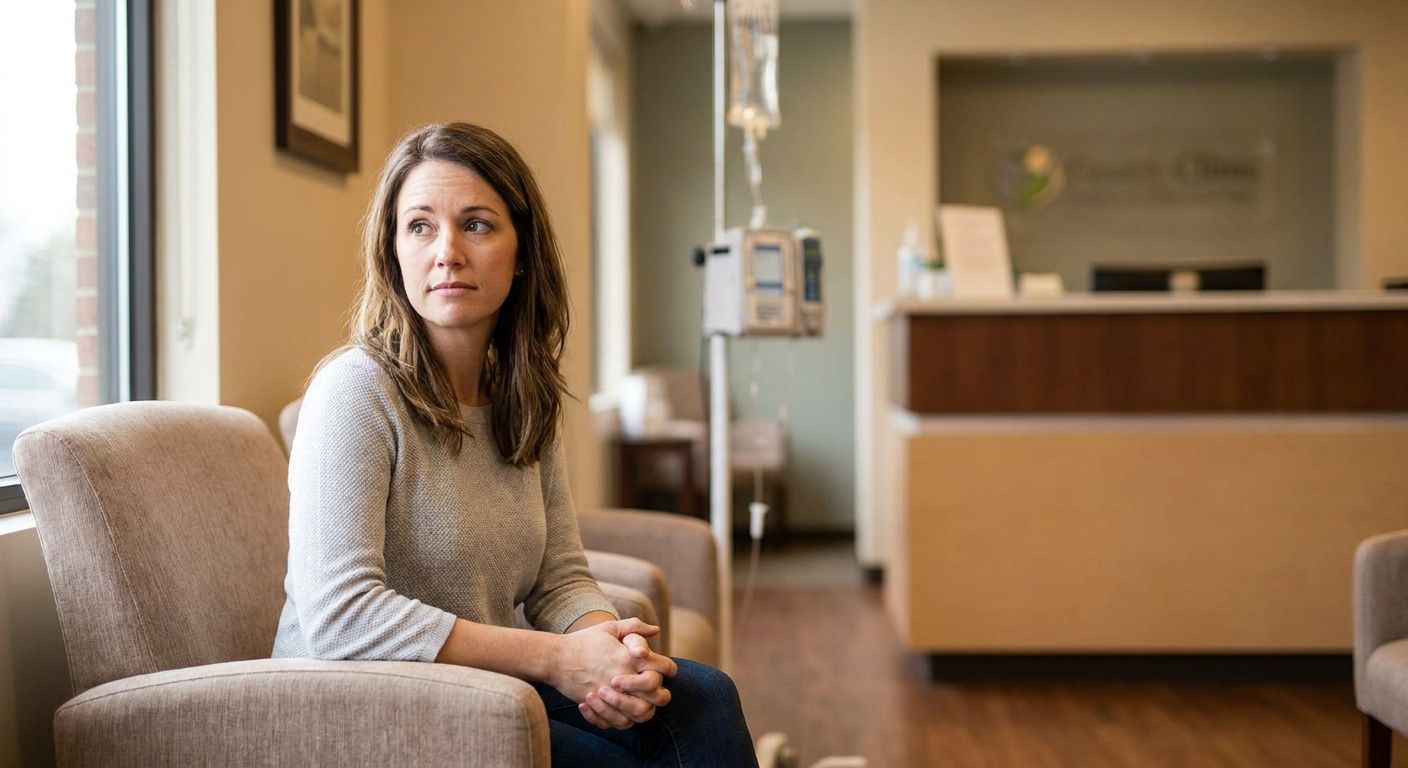
Walking into your first IV infusion appointment with a knot in your stomach is common, and there's a practical way through it: prepare your body, prepare your questions, and know exactly what the first 45 minutes will look like.
TL;DR
- IV therapy appointment anxiety drops fastest when you arrive hydrated, fed, and with your medication list ready.
- A physician-led consult before the IV starts is the single biggest anxiety reducer for first-time patients in 2026.
- Needle anxiety responds well to paced breathing (4 counts in, 6 counts out) started 10 minutes before your appointment.
- Most first infusions, including a Myers Cocktail or Vitamin C drip, run 30 to 60 minutes start to finish.
- Skip caffeine the morning of your visit if you already run anxious — it amplifies heart rate and makes the needle moment feel worse.
Why this matters
Anxiety before a first infusion is usually a mix of two fears: the needle itself and the unknown of what happens after it's in. Both are manageable with preparation, and neither means you should skip a treatment your physician recommended.
At Infusion Center of NJ, first-time patients at the Clifton and Tenafly locations go through a physician-led intake before any needle is involved, which is designed specifically to address this. Knowing your infusion is monitored by board-certified staff, not administered on a walk-in drip-bar basis, changes how the whole visit feels for anxious patients.
The steps below are the same ones a calm, prepared patient runs through before any outpatient IV procedure in 2026 clinical settings.
What you'll need
- A list of current medications and allergies, written down, not memorized
- 16 to 24 ounces of water consumed in the two hours before arrival
- A light meal eaten within 2 to 3 hours of your appointment (never arrive fasting)
- Loose sleeves or a short-sleeve top for easy IV access
- 10 to 15 minutes of buffer time before your scheduled slot
- A short list of questions for the intake consult (symptoms, goals, prior reactions to needles)
The steps
1. Hydrate the day before, not the morning of
Dehydration makes veins harder to find, and a difficult IV start is the number one thing that turns mild nerves into real anxiety. Drink water steadily the day before your appointment, aiming for at least 64 ounces total, then top off with another 16 to 24 ounces the morning of your visit.
Expected outcome: veins sit closer to the surface and are easier to access on the first attempt, which shortens the whole procedure. Common mistake: chugging a large amount of water 10 minutes before you walk in — it doesn't have time to circulate and just leaves you needing a restroom mid-infusion.
2. Eat something with protein 2-3 hours before
Low blood sugar mimics anxiety symptoms almost exactly: shaky hands, racing heart, lightheadedness. Eating a meal with protein 2 to 3 hours before your appointment keeps blood sugar stable through the entire visit.
Expected outcome: you walk in with a calm baseline instead of stacking hunger-related jitters on top of needle nerves. Common mistake: arriving fasted because you assume infusions require an empty stomach — most IV therapy, including Myers Cocktail and Vitamin C protocols, does not require fasting.
3. Write down your questions before you arrive
Uncertainty drives anxiety more than the needle does. Writing three to five specific questions down — what's in the bag, how long it takes, what side effects to expect — gives you something concrete to bring to the intake consult instead of a vague sense of dread.
Expected outcome: the physician-led consult answers your actual concerns instead of a generic script, and you leave the pre-treatment conversation with less to worry about, not more. Common mistake: assuming you'll remember your questions once you're nervous — you won't, write them down.
4. Use paced breathing starting 10 minutes before your slot
A 4-count inhale through the nose followed by a 6-count exhale through the mouth, repeated for 10 cycles, activates the parasympathetic nervous system and measurably slows heart rate. Start this in the waiting area, not once the needle is already out.
Expected outcome: your resting heart rate drops before staff even prep your arm, which makes the actual insertion far less noticeable. Common mistake: holding your breath at the moment of the needle — that spikes tension in the exact muscle group that needs to stay relaxed.
5. Tell staff about needle anxiety before they prep your arm
Saying "I get anxious about needles" out loud to the nurse or physician before they start is not an inconvenience — it's information they use. Staff at a physician-led infusion practice will adjust pacing, use a topical numbing option where appropriate, or talk you through each step in real time.
Expected outcome: the person holding the needle already knows to slow down and narrate, which removes the surprise factor that spikes anxiety. Common mistake: staying silent to avoid seeming difficult — disclosing anxiety in advance is standard, not unusual, in 2026 outpatient infusion settings.
6. Look away during insertion, not during the whole infusion
Watching the needle go in raises anxiety for most people; watching the drip afterward does not. Look away or close your eyes only for the 10 to 15 seconds of actual insertion, then reopen your eyes once the line is secured and taped.
Expected outcome: you avoid the visual trigger without spending 45 minutes staring at a wall, which gets boring and lets your mind wander back to worry. Common mistake: keeping your eyes shut the entire infusion — it often makes people more aware of every sensation, not less.
7. Plan something ordinary for right after
Having a normal activity lined up immediately after your appointment — driving to pick up coffee, a scheduled call, a short walk — gives your brain a clear signal that the appointment is over and life continues as usual.
Expected outcome: you leave the anxiety in the treatment room instead of carrying it into the rest of your day. Common mistake: scheduling nothing afterward and sitting in the car ruminating about how it went.
Talk through your concerns before you book
A physician-led consult at Clifton or Tenafly answers your questions before any IV starts.
Troubleshooting
- Your heart rate spikes the moment you sit in the chair. Restart the 4-count-in, 6-count-out breathing pattern immediately and ask staff to pause for 30 seconds before they proceed — physician-led practices build this flexibility into the appointment.
- You feel lightheaded once the IV starts. Tell staff right away; it's usually a vasovagal response to the needle, not the fluid itself, and reclining the chair back resolves it within a minute or two.
- Your vein rolls or the first attempt doesn't land. This is common and not a sign of a bad appointment — a second attempt on the other arm is standard practice and doesn't reflect on your veins or the clinician's skill.
- You start feeling anxious 15 minutes into the drip with nothing happening. Boredom-driven anxiety is real; bring headphones or a podcast queued up before you sit down.
- You freeze up and can't answer intake questions clearly. Hand over your written question list and medication notes instead of trying to recall everything verbally under stress.
- You feel shaky or nauseous afterward. This is more often linked to skipping food or water beforehand than the infusion itself — eat something and rehydrate in the first hour after leaving.
Tools and resources
- A written medication and allergy list (physical or in your phone, ready to show)
- A hydration plan starting 24 hours ahead, not the morning of
- A paced-breathing routine (4 in, 6 out) practiced once at home before your appointment day
- Headphones or a podcast for the infusion itself
- The intake consult at Infusion Center of NJ at either the Clifton or Tenafly location, where a physician reviews your history before treatment begins
What to do next
Once you've been through one infusion, the anxiety curve for every appointment after it drops sharply — most patients report the second visit feels routine compared to the first. If needle anxiety is severe rather than mild nervousness, mention it explicitly during intake so staff can plan the visit around it from the start, including which arm to use and how much narration you want during insertion.
FAQ
Is it normal to feel anxious before a first IV therapy appointment?
Yes, needle anxiety and general first-appointment nerves are common and don't mean you should skip a recommended infusion. Preparation — hydration, eating beforehand, and a pre-treatment consult — addresses most of it directly.
How long does a first IV therapy appointment take in 2026?
A first infusion, including intake and a Myers Cocktail or Vitamin C drip, typically runs 30 to 60 minutes total. The consult portion alone usually takes 10 to 15 minutes before the IV starts.
Should I eat before an IV infusion appointment?
Yes, eat a meal with protein 2 to 3 hours before your visit. Fasting increases the odds of lightheadedness and can mimic anxiety symptoms like shakiness and a racing heart.
Can I tell staff I'm anxious about needles?
Yes, and you should say so before your arm is prepped. Physician-led infusion staff routinely adjust pacing and narration for patients who disclose needle anxiety in advance.
What breathing technique helps with IV needle anxiety?
A 4-count inhale through the nose followed by a 6-count exhale through the mouth, repeated for about 10 cycles, slows heart rate before the needle is placed. Start it in the waiting room, not once the needle is already out.
Does dehydration make IV insertion more painful?
Dehydration makes veins smaller and harder to access, which increases the chance of a difficult first attempt. Drinking 16 to 24 ounces of water in the two hours before your appointment, on top of steady hydration the day before, makes access easier.
What happens if the first IV attempt doesn't work?
A missed first attempt is common and not unusual — clinicians typically try the other arm and proceed without issue. It doesn't reflect a problem with your veins or the appointment.
Is a physician involved in a first IV therapy consult?
At a physician-led practice, yes — a board-certified physician or supervised clinician reviews your medical history, medications, and goals before any infusion starts. This consult is where most first-appointment questions get resolved.
One last thing
The single biggest predictor of a calm second appointment is what happens in the first 60 seconds of the first one — patients who speak up about needle anxiety before the IV starts consistently report an easier experience than those who stay quiet and hope it goes fine. Say it out loud before they prep your arm; that one sentence does more than any breathing exercise.