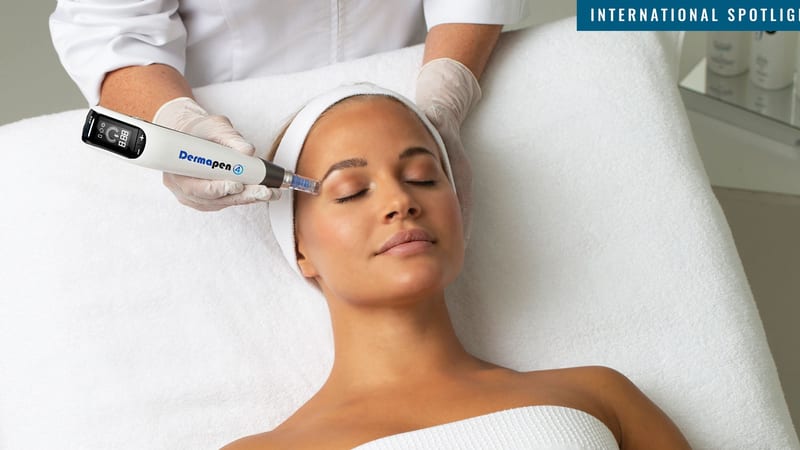
Microneedling has been a staple of medical aesthetics for years, but the gap between a $30 at-home roller and a physician-administered Dermapen 4 session is not a matter of degree — it is a matter of mechanism. Dermapen 4 uses motorized vertical stamping with adjustable needle depth and speed to create precise micro-channels in the dermis without the epidermal tearing that angled roller needles produce. That distinction matters for outcomes, downtime, and infection risk.
At Infusion Center of NJ, Dr. Jeffrey A. Weiss, MD, FACP, combines Dermapen 4 microneedling with topical exosome protocols, radiofrequency skin tightening, neuromodulators, dermal fillers, and IV nutritional support — including IV Vitamin C, Glutathione, and Biotin — at both the Clifton and Tenafly locations. This guide covers the protocols, the evidence behind combining external and internal approaches, and how to decide which treatments belong in your plan.
TL;DR
- Dermapen 4 digital microneedling creates precise vertical micro-channels that trigger the skin's collagen remodeling cascade — effective for acne scarring, fine lines, enlarged pores, uneven pigmentation, and scalp hair restoration.
- Vertical stamping with Dermapen 4 avoids the epidermal tearing caused by angled roller needles, which reduces post-inflammatory hyperpigmentation risk and allows more controlled depth adjustment across different facial zones.
- Pairing Dermapen 4 with topical exosomes (MG-EXO-SKIN) immediately post-procedure amplifies cellular signaling through the open micro-channels, accelerating recovery and enhancing collagen and elastin response.
- IV Vitamin C is an essential cofactor for collagen synthesis; IV Glutathione supports oxidative skin recovery — stacking either with a microneedling or RF session in the same visit is a clinically logical combination, not a marketing add-on.
- All aesthetic procedures at Infusion Center of NJ are performed or directly supervised by Dr. Weiss — not delegated to aestheticians operating without physician oversight.
- Clifton and Tenafly locations. Book a consultation at /book or call (973) 272-6220.
Why this matters
The aesthetic medicine market in 2026 is saturated with devices, protocols, and branded treatment names that often describe the same underlying mechanism with different marketing language. Dermapen 4 is a specific device — a motorized, digitally controlled microneedling pen with 16 needles, adjustable depth from 0.1 mm to 3.0 mm, and a stamping motion that creates vertical channels rather than the dragging motion of a roller.
The clinical significance of vertical stamping is not subtle. Roller devices create angled punctures that tear the epidermis as the needle enters and exits at an angle, which increases epidermal damage, post-procedure redness, and the risk of post-inflammatory hyperpigmentation — particularly in darker skin tones. Dermapen 4's vertical entry and exit minimizes lateral tissue disruption, which is why it can be used at greater depths with less surface trauma and shorter downtime.
The second distinction at Infusion Center of NJ is the integration of internal nutritional support with external aesthetic procedures. Collagen synthesis requires Vitamin C as a cofactor — without adequate Vitamin C, the hydroxylation steps that stabilize the collagen triple helix cannot proceed normally. Glutathione is the body's primary intracellular antioxidant and plays a direct role in melanin regulation and oxidative stress recovery. Running an IV Vitamin C or Glutathione drip in conjunction with a microneedling or RF session is not a wellness upsell — it is a physiologically coherent approach to supporting the tissue repair process that the procedure initiates.
Protocol verdicts
3-to-4 Session Dermapen 4 Series for Acne Scarring, Texture & Fine Lines
Collagen remodeling is not a single-event process. The initial inflammatory response to microneedling triggers fibroblast activation and new collagen deposition, but the remodeling phase — where disorganized scar collagen is replaced with more organized, functional collagen — continues for weeks after each session. A single treatment produces visible improvement; a series of three to four sessions spaced four to six weeks apart produces cumulative improvement that a single session cannot replicate.
For acne scarring specifically, the depth of the channels matters. Rolling scars and boxcar scars require needle penetration into the papillary and upper reticular dermis — typically 1.0 to 1.5 mm — to reach the fibrous bands that tether the scar base. Dermapen 4's adjustable depth allows the treating physician to vary depth across facial zones in a single session, using shallower settings around the orbital area and deeper settings over the cheeks and jawline where acne scarring is typically most pronounced.
Verdict: Buy. A three-to-four session series spaced at four-to-six week intervals is the standard protocol for acne scarring, texture improvement, and fine line reduction. Results are cumulative and continue improving for up to three months after the final session.
Dermapen 4 Paired with Topical Exosomes (MG-EXO-SKIN) or Scalp Hair Restoration Protocol
Exosomes are extracellular vesicles that carry growth factors, cytokines, and signaling molecules between cells. Applied topically immediately after microneedling — when the micro-channels are open and the skin's barrier is temporarily disrupted — exosomes penetrate far deeper than they would on intact skin and deliver their signaling payload directly to the dermal fibroblasts and keratinocytes that drive the repair response.
MG-EXO-SKIN is a lyophilized exosome concentrate derived from human adipose-derived stem cells. Applied post-Dermapen 4, it delivers a concentrated dose of growth factors including TGF-β, VEGF, and EGF directly into the dermis, amplifying the collagen and elastin response beyond what microneedling alone produces. The same principle applies to scalp hair restoration: Dermapen 4 applied to the scalp at shallower depths (0.5–1.0 mm) combined with exosome application targets the follicular dermal papilla cells that regulate hair growth cycling.
Verdict: Buy for accelerated post-procedure recovery and targeted follicular or cellular signaling. The exosome pairing is particularly well-supported for patients with acne scarring, hair thinning, or skin laxity who want to maximize the return on each microneedling session.
Stacking Microneedling with an IV Vitamin C + Glutathione Drip in the Same Visit
Vitamin C (ascorbic acid) is a required cofactor for prolyl hydroxylase and lysyl hydroxylase, the enzymes that hydroxylate proline and lysine residues during collagen synthesis. Without adequate Vitamin C, newly synthesized collagen chains cannot form stable triple helices and are degraded before they can be incorporated into the extracellular matrix. IV Vitamin C delivers ascorbate directly into the bloodstream at concentrations that oral supplementation cannot achieve, ensuring that the fibroblasts activated by microneedling have the cofactor supply they need during the synthesis phase.
Glutathione's role is complementary. Microneedling and RF procedures generate localized oxidative stress as part of the inflammatory repair cascade. Glutathione, as the primary intracellular antioxidant, supports the resolution of that oxidative stress and plays a direct role in melanin synthesis regulation — specifically, it shifts melanogenesis toward lighter phaeomelanin and away from darker eumelanin, which is relevant for patients concerned about post-inflammatory pigmentation.
Running either or both in the same visit as a microneedling or RF session adds approximately 45–60 minutes to the appointment but provides systemic nutritional support that is physiologically timed to the procedure's repair window.
Verdict: Consider. The combination is clinically logical and well-tolerated. It is not mandatory for every patient, but for patients with acne scarring, pigmentation concerns, or those pursuing a comprehensive skin rejuvenation protocol, the internal-external pairing is a meaningful addition to the treatment plan.
At-Home Derma Rollers or Unsupervised Spa Microneedling at Arbitrary Depths
At-home derma rollers use angled needles that drag across the skin surface, creating oblique punctures rather than vertical channels. The mechanical tearing at the epidermis increases surface trauma, extends redness and peeling, and raises the risk of post-inflammatory hyperpigmentation — particularly in Fitzpatrick skin types III through VI. Roller needles also dull with use and are rarely sterilized adequately between sessions, which introduces infection risk that a single-use, sterile Dermapen 4 cartridge eliminates by design.
Spa microneedling performed without physician oversight typically uses fixed-depth settings that are not adjusted for facial zone, skin thickness, or the specific concern being treated. A 1.5 mm depth appropriate for cheek acne scarring is inappropriate for the periorbital area, where the dermis is 0.5 mm thick. Applying the same depth across the entire face without adjustment is not a conservative approach — it is an uninformed one.
Verdict: Skip. Angled needles tear tissue, improper sterility risks post-inflammatory hyperpigmentation or infection, and fixed-depth spa protocols cannot replicate the zone-specific depth adjustment that physician-administered Dermapen 4 provides.
Ready to discuss your skin goals?
Book an aesthetic consultation with Dr. Weiss at our Clifton or Tenafly location. Call (973) 272-6220 or book online.
Comparison table
| Treatment | Primary Skin Target | Typical Downtime | Recommended Sessions | Ideal Pairing at Infusion Center of NJ |
|---|---|---|---|---|
| Dermapen 4 + Exosomes | Acne scarring, texture, fine lines, pores, hair thinning | 24–72 hours redness and mild peeling | 3–4 sessions, 4–6 weeks apart | IV Vitamin C + Glutathione drip same visit |
| Radiofrequency (RF) Skin Tightening | Skin laxity, jowls, neck, periorbital tightening | Minimal — mild warmth and swelling 24–48 hours | 3–6 sessions, 2–4 weeks apart | Dermapen 4 series; IV Glutathione for oxidative recovery |
| Neuromodulators (Botox) & Dermal Fillers | Dynamic wrinkles, volume loss, facial contour | Minimal — bruising possible 3–7 days | Botox every 3–4 months; fillers every 9–18 months | Dermapen 4 for skin quality; IV Vitamin C for collagen support |
| Medical Chemical Peels | Pigmentation, sun damage, superficial texture | 3–7 days peeling depending on depth | 3–6 sessions, 3–4 weeks apart | Dermapen 4 alternating series; IV Glutathione for pigmentation |
What to avoid
Scheduling microneedling immediately before a major event. Dermapen 4 produces redness, mild swelling, and a sunburn-like sensation for 24–72 hours post-procedure, with superficial peeling possible through day four or five. Plan sessions at least two weeks before any event where skin appearance matters.
Combining microneedling with active skin infections, open acne lesions, or recent isotretinoin use. Active acne lesions, cold sores, or any open skin disruption in the treatment area are contraindications for microneedling — the procedure can spread bacteria or viral particles across the treatment zone. Isotretinoin use within the past six months impairs wound healing and increases the risk of scarring from any skin resurfacing procedure.
Expecting a single session to correct deep acne scarring. Atrophic acne scars — rolling, boxcar, and icepick — involve structural changes in the dermis that require multiple collagen remodeling cycles to improve. A single session produces visible improvement in skin texture and tone, but significant scar improvement requires a committed series. Patients who book one session expecting the results of four are consistently disappointed.
Choosing a facility based on device name alone without confirming physician involvement. Dermapen 4 is a device. The outcome depends on the depth settings, needle speed, pass pattern, and post-procedure protocol chosen by the person administering the treatment. A physician who understands facial anatomy and wound healing physiology produces different results than an aesthetician following a fixed protocol. At Infusion Center of NJ, all aesthetic procedures are performed or directly supervised by Dr. Weiss.
Where to book aesthetic treatments in Clifton and Tenafly
The Advanced Aesthetic MedSpa at Infusion Center of NJ offers Dermapen 4 microneedling, exosome protocols, RF skin tightening, Botox, dermal fillers, Sculptra, PDO threads, and medical chemical peels at both the Clifton and Tenafly locations.
IV nutritional support — including IV Vitamin C, Glutathione, and Biotin through our vitamin injections and IV drips menu — can be coordinated in the same visit as aesthetic procedures for patients pursuing a combined internal-external approach.
The Clifton location at 842 Clifton Ave Suite 4 is open seven days a week including Thursday evenings. The Tenafly location at 111 Dean Drive Suite 1S serves Bergen County patients.
Call (973) 272-6220 or book a consultation online to discuss your skin goals with Dr. Weiss.
FAQ
How is Dermapen 4 different from traditional microneedling pens or rollers?
Dermapen 4 uses a motorized stamping motion with 16 needles that enter and exit the skin vertically, creating precise micro-channels without lateral tissue tearing. Traditional rollers use angled needles that drag across the skin surface, producing oblique punctures that increase epidermal damage and post-inflammatory hyperpigmentation risk. Dermapen 4 also allows real-time depth adjustment from 0.1 mm to 3.0 mm, enabling zone-specific treatment in a single session — something a fixed-depth roller or basic pen cannot replicate.
What skin concerns does Dermapen 4 treat best?
Dermapen 4 is most effective for acne scarring (rolling, boxcar, and superficial icepick scars), fine lines and wrinkles, enlarged pores, uneven skin texture, and mild-to-moderate skin laxity. It also addresses pigmentation irregularities by stimulating skin turnover and can be combined with topical brightening agents applied through the open micro-channels post-procedure. For deeper structural concerns like significant volume loss or severe laxity, Dermapen 4 is typically combined with RF tightening, fillers, or biostimulators as part of a comprehensive plan.
Can Dermapen 4 microneedling be used for hair thinning on the scalp?
Yes. Dermapen 4 applied to the scalp at shallower depths — typically 0.5 to 1.0 mm — creates micro-channels that stimulate the follicular dermal papilla cells responsible for hair growth cycling. When combined with topical exosome application immediately post-procedure, the growth factors and cytokines in the exosome concentrate penetrate directly to the follicular level, supporting follicle activation and hair density improvement. This protocol is appropriate for androgenetic alopecia and diffuse thinning; it is not a replacement for medical hair loss treatment in patients with significant follicular miniaturization.
How many Dermapen 4 sessions do I need to see visible results?
Most patients notice improved skin texture and reduced pore appearance after a single session. Meaningful improvement in acne scarring and fine lines typically requires three to four sessions spaced four to six weeks apart, as collagen remodeling is cumulative across treatment cycles. Final results continue improving for up to three months after the last session as the remodeling phase completes. Dr. Weiss will recommend a session count at your consultation based on your specific concerns, skin type, and treatment history.
What is the downtime after physician-administered microneedling?
Expect redness and a sunburn-like sensation for 24 to 72 hours after a Dermapen 4 session. Mild swelling and superficial peeling are common through day three or four. Most patients return to normal activities within 24 to 48 hours with mineral-based makeup coverage. Avoid direct sun exposure, active skincare ingredients (retinoids, AHAs, BHAs), and swimming pools or saunas for five to seven days post-procedure. Deeper treatment depths for acne scarring may extend the redness phase by one to two days.
Why pair IV Vitamin C or Glutathione with microneedling or RF skin tightening?
Vitamin C is a required cofactor for the enzymes that stabilize newly synthesized collagen — without adequate ascorbate, collagen chains cannot form stable triple helices and are degraded before incorporation into the extracellular matrix. IV Vitamin C delivers concentrations that oral supplementation cannot achieve, timed to the collagen synthesis window that microneedling opens. Glutathione supports oxidative stress resolution post-procedure and shifts melanin synthesis toward lighter phaeomelanin, which is relevant for patients with pigmentation concerns or post-inflammatory hyperpigmentation risk. Both are available as IV drips or vitamin injections and can be coordinated in the same visit as your aesthetic procedure.
Who performs the aesthetic procedures at Infusion Center of NJ in Clifton and Tenafly?
All aesthetic procedures at Infusion Center of NJ are performed or directly supervised by Dr. Jeffrey A. Weiss, MD, FACP — a board-certified internist and 2026 NJ Top Docs honoree. Dr. Weiss conducts the initial aesthetic consultation, develops the treatment plan, and is present for all procedures. Treatments are not delegated to aestheticians operating without physician oversight.
How do I schedule an aesthetic MedSpa consultation with Dr. Weiss?
Call (973) 272-6220 or book online. Consultations are available at both the Clifton location (842 Clifton Ave Suite 4, open seven days including Thursday evenings) and the Tenafly location (111 Dean Drive Suite 1S). At the consultation, Dr. Weiss reviews your skin concerns, treatment history, and goals, then recommends a protocol — which may include Dermapen 4, RF tightening, injectables, IV nutritional support, or a combination — tailored to your anatomy and timeline.
One last thing
The most effective aesthetic outcomes in 2026 come from treating the skin as a tissue with physiology, not a surface with cosmetic problems. Dermapen 4 initiates a wound healing response. Exosomes amplify the cellular signaling that drives that response. IV Vitamin C and Glutathione support the biochemical environment in which the repair happens. The treatments are distinct, but the biology connecting them is not.