
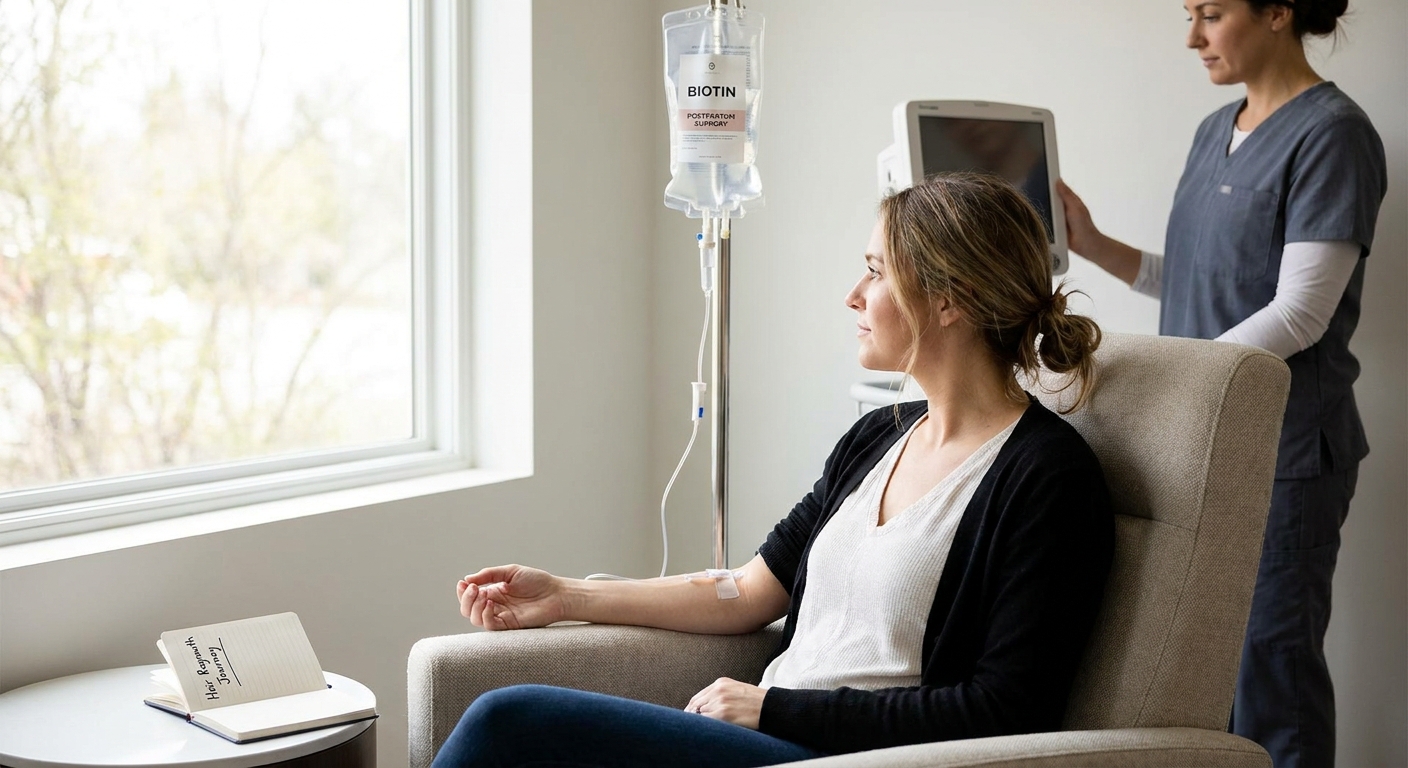
Postpartum hair loss hits an estimated 40-50% of new mothers between three and six months after delivery, and biotin IV therapy has become one of the most-searched fixes for it. This guide breaks down what actually matters when choosing biotin IV therapy for postpartum hair loss, not just what sounds good on a menu.
TL;DR
- Biotin IV therapy for postpartum hair loss works best combined with iron correction, not as a standalone fix.
- Telogen effluvium affects 40-50% of new mothers 3-6 months postpartum and typically self-resolves by 12 months.
- A Biotin-boosted Myers Cocktail at Infusion Center of NJ is the safe pick for breastfeeding mothers in 2026: Consider.
- Skip high-dose biotin if you have upcoming thyroid or cardiac lab work — it skews results for 48-72 hours.
Why this matters
Postpartum hair shedding is hormonal, not cosmetic vanity, and treating it that way leads mothers to waste months on shampoo fixes that don't touch the root cause. Estrogen drops sharply after delivery, pushing hair follicles out of the growth phase and into shedding all at once. That's telogen effluvium, and it's the reason a new mother can lose noticeably more hair in the shower drain by month four.
Biotin supports keratin production, the protein hair is built from, but oral biotin has to survive digestion and absorption before it reaches a follicle. IV delivery skips that step entirely. In 2026, physician-led infusion clinics are seeing more postpartum patients specifically because oral supplements plateaued after 8-10 weeks of no visible change.
Who this is for
This guide is for new mothers 6 weeks to 12 months postpartum who are noticing visible shedding, thinning at the part line, or slower regrowth than expected, and who want a physician-supervised option rather than a drip-bar walk-in. If you're currently breastfeeding, on iron supplements, or managing postpartum fatigue alongside the hair concern, the criteria below apply directly to you. At Infusion Center of NJ, postpartum patients are evaluated by a physician before any infusion protocol is built, which matters more here than in most wellness categories because breastfeeding changes what's safe to infuse.
What to look for in biotin IV therapy for postpartum hair loss
Physician oversight, not just a nurse on staff
Postpartum patients carry variables a drip-bar checklist doesn't catch: breastfeeding status, retained iron deficiency from delivery, thyroid shifts. A board-certified physician reviewing your history before infusion catches contraindications a menu-based clinic won't ask about.
Transparent biotin dosing
The RDA for biotin is 30 mcg daily, but IV formulations run in the milligram range, thousands of times higher. You want a clinic that states the actual dose in the bag, not just "biotin included." Megadoses above 10 mg can interfere with troponin and thyroid lab panels for 48-72 hours, which matters if you have postpartum bloodwork scheduled.
Iron and ferritin screening before you start
A ferritin level under 30 ng/mL is a common threshold clinicians use to flag iron-deficiency-driven shedding, and postpartum blood loss makes this common. Biotin alone won't fix hair loss that's actually iron deficiency. Look for a clinic that asks about your ferritin or offers to check it before building your protocol.
Breastfeeding-compatible formulation
Not every additive in a wellness IV cocktail is breastfeeding-neutral. A clinic that adjusts the formulation for lactating patients, rather than running the same bag for everyone, is the one worth booking.
Realistic timeline expectations
Telogen effluvium typically resolves on its own within 6-12 months as the hair cycle resets. A credible provider tells you this upfront instead of promising visible results in two sessions.
Setting that fits a sleep-deprived new mother
Session length, chair comfort, and whether you can bring an infant matter more here than in almost any other IV therapy category. A rushed, clinical-feeling appointment adds stress a postpartum body doesn't need.
Top picks for postpartum hair loss
Biotin-boosted Myers Cocktail — the foundational pick. Combines B-vitamins, magnesium, and biotin in one infusion, typically delivered over 30-45 minutes. This is the starting point most physicians recommend before layering anything else in 2026. Consider.
Iron infusion — the pick for anemia-linked shedding. If ferritin comes back under 30 ng/mL, biotin alone won't move the needle; iron repletion addresses the actual driver of the shedding. Sessions run shorter than a full vitamin cocktail and target a specific lab-confirmed deficiency. Consider if ferritin is low, otherwise Skip.
Standalone biotin push — the quick add-on. A faster, lower-volume infusion for mothers who already get a full Myers Cocktail regularly and just want the biotin dose bumped. Not a replacement for the full cocktail. Consider as an add-on only.
High-dose Vitamin C infusion — the antioxidant pick. Supports collagen synthesis, which plays a secondary role in hair and scalp health, but it is not a direct biotin substitute. Best paired with, not instead of, a biotin protocol. Consider as a complement.
NAD+ infusion — the energy-support pick, not a hair-loss treatment. Postpartum fatigue is real, and NAD+ is marketed for cellular energy, but there's no direct mechanism tying it to hair regrowth. Worth asking about only if fatigue, not hair, is your primary complaint. Skip if hair loss is the sole goal.
Talk to a physician about postpartum hair loss
Get a personalized infusion plan built around your labs, not a fixed menu.
What to avoid
- Walk-in drip bars with no lab review. If nobody asks about your delivery, breastfeeding status, or recent bloodwork, the protocol is generic, not personalized.
- Megadose biotin with no lab-interference warning. If a provider doesn't mention that high-dose biotin skews thyroid and cardiac labs for 48-72 hours, they're not thinking about your full care picture.
- Promises of visible regrowth in under a month. Telogen effluvium runs a 6-12 month biological cycle. Anyone promising faster results is selling hype, not physiology.
Verdict comparison
| Option | Best For | Key Detail | Verdict |
|---|---|---|---|
| Biotin-boosted Myers Cocktail | Most postpartum patients | B-vitamins + magnesium + biotin, 30-45 min | Consider |
| Iron infusion | Ferritin under 30 ng/mL | Targets confirmed deficiency | Consider if low ferritin |
| Standalone biotin push | Existing Myers Cocktail patients | Faster, lower-volume add-on | Consider as add-on |
| High-dose Vitamin C | Scalp/collagen support | Complements biotin, not a substitute | Consider as complement |
| NAD+ infusion | Postpartum fatigue, not hair | No direct hair-regrowth mechanism | Skip for hair alone |
FAQ
Is biotin IV therapy safe while breastfeeding?
Biotin IV therapy can be safe while breastfeeding when a physician reviews your history and adjusts the formulation, but not every additive in a standard cocktail is lactation-neutral. Always confirm the exact formulation with your provider before your first session in 2026.
How soon after birth can you start biotin IV therapy?
Most physicians clear postpartum patients for infusion therapy once initial recovery milestones are met, often around 6 weeks. Timing depends on delivery type and any complications, so a physician evaluation comes first.
Does biotin IV therapy work better than oral biotin supplements?
IV delivery bypasses digestive absorption entirely, which is the main advantage over oral biotin. Oral biotin still has to survive the gut before reaching circulation, and many postpartum patients report a plateau after 8-10 weeks of oral use alone.
Can iron deficiency cause postpartum hair loss?
Yes, iron deficiency is a well-documented driver of postpartum shedding, especially when ferritin falls under 30 ng/mL. Biotin alone won't correct hair loss caused by low iron, which is why ferritin screening matters before starting a protocol.
How many biotin IV sessions are needed for postpartum hair loss?
There's no fixed number that applies to everyone, since it depends on ferritin levels, thyroid status, and how far along the shedding cycle is. A physician-built protocol typically reassesses after a few sessions rather than committing to a fixed package upfront.
What's the difference between biotin IV therapy and a Myers Cocktail?
A Myers Cocktail is a broader B-vitamin and mineral blend that often includes biotin as one component, while standalone biotin therapy isolates just that ingredient. Most postpartum protocols start with the fuller cocktail rather than biotin alone.
How much does biotin IV therapy cost in 2026?
Pricing varies by clinic, formulation, and whether iron or additional labs are involved, so check current pricing directly with the provider. A physician consultation typically determines which add-ons are actually needed before quoting a full protocol.
Is biotin IV therapy covered by insurance?
Wellness-focused IV infusions like biotin therapy are generally not covered by insurance since they're elective, though iron infusions for confirmed deficiency sometimes are. Ask the clinic directly about billing before scheduling.
One last thing
The detail most new mothers miss: megadose biotin can throw off thyroid and cardiac lab panels for up to 72 hours after infusion, which matters a lot if your OB has postpartum bloodwork scheduled. Tell your infusion provider about any upcoming labs before you book, not after.
Biotin IV therapy for postpartum hair loss works best as one piece of a physician-reviewed plan, not a standalone fix bought off a drip-bar menu. Get ferritin checked, get the formulation reviewed for breastfeeding safety, and set a 6-12 month expectation before your first session in 2026.